Pay in installments of $7.32 with
 ,
,
 and
and

Shipping Estimate
USA
- USA
- CAN
- USA
- CAN
Ships within 48 hours · Estimated delivery Jul 1 - Jul 6
 Promo Codes Available:
For Your Every Summer RSVP, with Code: SUMMER15
Description
red palm like plant Green Paradise Red Palm Plant Cyrtostachys renda Live Plant – GreenParadiseLiveThe Majestic Red Palm Plant: A Green Marvel In the lush world of tropical flora, the Red Palm Plant stands as a regal sentinel, commanding attention with its striking appearance and an array of valuable attributes. Native to regions like Southeast Asia, the South Pacific, and Northern Australia, this botanical wonder has garnered admiration for centuries. Beyond its ornamental allure, the Red Palm boasts a rich history, impressive adaptability, and
The Majestic Red Palm Plant: A Green
Marvel
In the lush world of tropical flora, the Red Palm Plant stands as a regal sentinel, commanding attention with its striking appearance and an array of valuable attributes. Native to regions like Southeast Asia, the South Pacific, and Northern Australia, this botanical wonder has garnered admiration for centuries. Beyond its ornamental allure, the Red Palm boasts a rich history, impressive adaptability, and numerous practical uses, making it a cherished addition to both natural landscapes and human societies.
The Royal Appearance
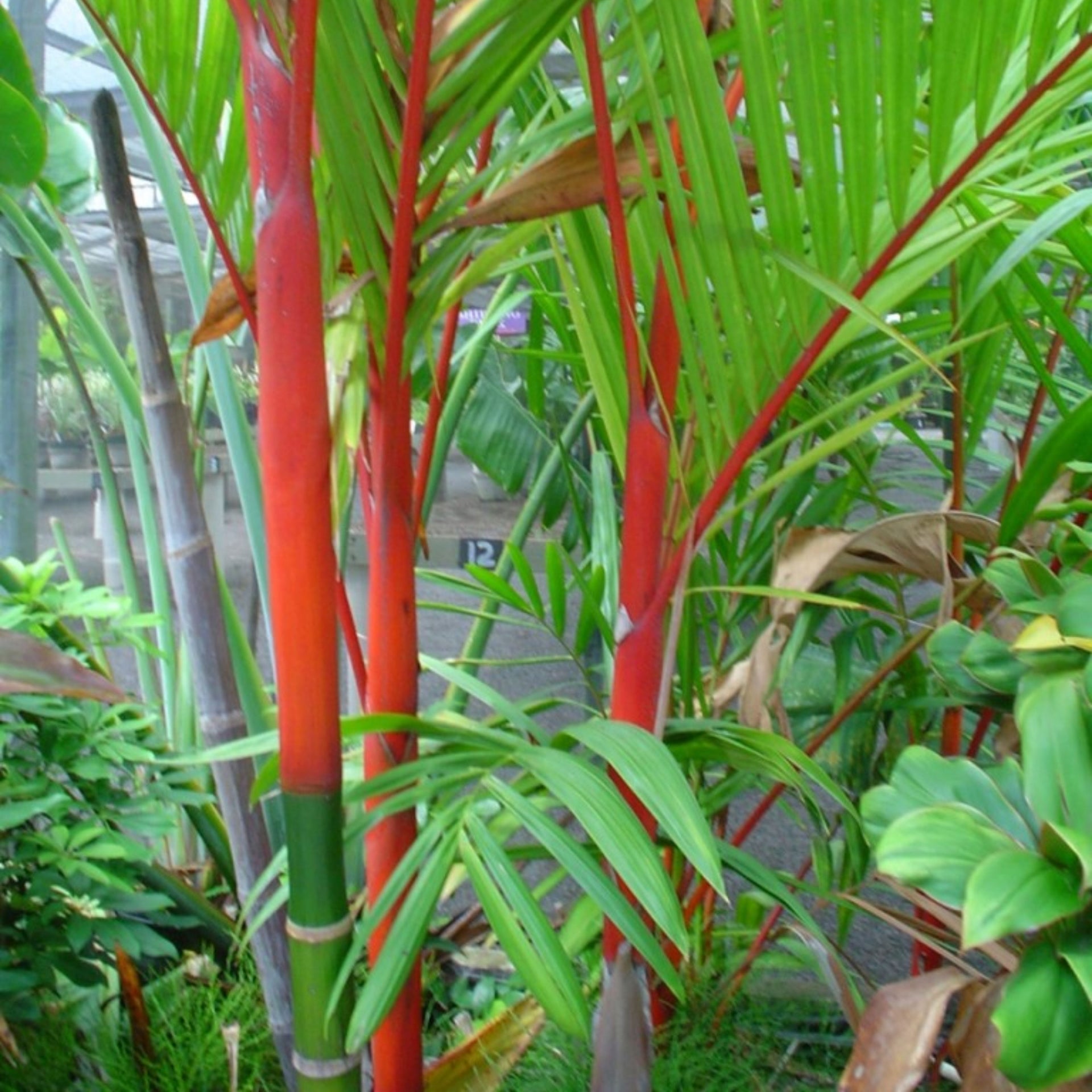
- The Red Palm (Cyrtostachys renda), also known as the Sealing Wax Palm, is named after its vibrant red crownshaft.
- This palm's most distinctive feature is its fiery red or maroon crownshaft, which acts as a protective sheath for emerging fronds.
- This vivid hue sets it apart from the more commonly seen green palms and has earned it the nickname "Lipstick Palm."
- The fronds themselves are a deep green, creating a striking contrast with the red crownshaft.
- The Red Palm typically reaches a height of 20 to 30 feet, though in its native habitat, it can grow even taller.
- Its slender trunk, covered in the remnants of old leaf bases, lends an elegant, columnar appearance.
- As the palm matures, these leaf bases fall away, revealing the smooth, grayish trunk underneath.
A Storied Past
- The Red Palm's history is as rich as its appearance.
- It is native to the lowland rainforests of Malaysia, Thailand, and the Philippines, where it has been a part of the landscape for centuries.
- In these regions, it holds cultural significance and is often used in traditional ceremonies and rituals.
- Additionally, the Red Palm has found a place in modern landscaping and horticulture around the world.
- Its stunning visual appeal makes it a popular choice for ornamental purposes.
- It's often used as a focal point in gardens, parks, and botanical collections.
Remarkable Adaptability
- One of the most remarkable characteristics of the Red Palm is its adaptability.
- While it thrives in its native rainforest habitat, it can also be grown in a variety of climates and soils, making it a versatile choice for landscapers and gardeners.
- It is well-suited to tropical and subtropical regions but can also tolerate some degree of drought once established.
- The adaptability of the Red Palm is not limited to its growing conditions.
- It is also quite resilient to pests and diseases, making it a low-maintenance choice for those looking to add a touch of tropical elegance to their surroundings.
Practical Uses
- Beyond its aesthetic value, the Red Palm has practical uses.
- The palm's wood is strong and durable, used in construction and making various tools and utensils in its native regions.
- The leaves are often woven into baskets, mats, and thatch for roofs.
- The fruit of the Red Palm is edible, and the sap can be tapped to make palm sugar, a staple in many Southeast Asian cuisines.
- In traditional medicine, various parts of the Red Palm have been used to treat ailments.
- The palm's heart, or apical bud, is a delicacy in some cultures and is said to have medicinal properties.
Conservation Concerns
- Despite its adaptability and widespread cultivation, the Red Palm is not without its conservation concerns.
- Habitat destruction due to deforestation and urbanization poses a threat to this majestic plant in its native range.
- Additionally, illegal harvesting of wild Red Palms for the horticultural trade has put pressure on wild populations.
- Efforts are underway to protect and conserve the natural habitats of the Red Palm, and sustainable cultivation methods are being encouraged to reduce the demand for wild specimens.
Cultivating the Beauty: A Guide on How to Grow the
Red Palm Plant
The Red Palm Plant, scientifically known as Cyrtostachys renda, is a stunning tropical palm species that captivates garden enthusiasts and interior decorators alike with its vibrant red stems and lush green fronds. Native to Southeast Asia, this striking plant can thrive both indoors and outdoors, making it a versatile addition to any green space. If you've been considering adding a touch of exotic elegance to your garden or home, read on to learn how to grow and care for the Red Palm Plant.
Understanding the Red Palm Plant
Before diving into the cultivation process, it's essential to familiarize yourself with the Red Palm Plant's characteristics:
Appearance
- The Red Palm Plant is best known for its striking red or maroon-colored stems, which provide a vivid contrast to its lush, green, pinnate leaves.
- The leaves are feather-like, growing in an arching fashion, creating an elegant and tropical aesthetic.
Size
- When grown in optimal conditions, Red Palm Plants can reach heights of 6 to 12 feet.
- As indoor plants, they typically stay on the shorter side, making them suitable for homes with various ceiling heights.
Requirements
- Red Palm Plants are native to tropical rainforests, which means they thrive in warm, humid conditions.
- They are considered suitable for USDA Hardiness Zones 10-11.
- However, with proper care, you can also grow them in Zones 9 and even 8.
Now, let's delve into the steps to successfully cultivate this eye-catching plant.
Step 1: Selecting the Right Location
Whether you plan to grow your Red Palm Plant indoors or outdoors, choosing the right location is crucial:
Outdoor Growth
Sunlight:
Red Palm Plants love bright, indirect sunlight. If you're planting it outdoors, choose a spot with partial shade or dappled sunlight to protect it from scorching rays.
Soil:
Well-draining soil is essential. A mixture of organic compost and peat moss works well to provide the necessary nutrients and drainage.
Indoor Growth
Light:
Place your Red Palm Plant near a bright, filtered light source, such as a south or west-facing window. To maintain even growth, occasionally rotate the plant.
Humidity:
Maintain humidity levels by misting the plant regularly or placing a tray filled with water and pebbles nearby. This replicates the tropical conditions it thrives in.
Step 2: Planting Your Red Palm
Whether you choose to plant it in a pot or directly in the ground, ensure the following:
Spacing:
Space multiple Red Palm Plants at least 6 to 8 feet apart to allow for proper growth.
Prepare the soil:
by adding organic matter as an amendment. Ensure it drains well, as Red Palm Plants do not tolerate waterlogged conditions.
Step 3: Watering and Feeding
Keep the soil continuously moist but not saturated by watering it. Water sparingly during the winter months. Remember, it's better to let the soil dry out slightly between watering.
Fertilizing:
Use a balanced, slow-release fertilizer during the growing season (spring and summer). Reduce or stop feeding during the winter when growth slows down.
Step 4: Pruning and Maintenance
Pruning:
Remove dead or yellowing fronds to encourage new growth. Be cautious not to remove too many healthy leaves, as this can stress the plant.
Repotting:
If your Red Palm Plant outgrows its pot, consider repotting it into a slightly larger container every 2-3 years.
Step 5: Pests and Disease Management
- While Red Palm Plants are generally resilient, be on the lookout for common indoor plant pests like mealybugs and scale.
- Neem oil or organic insecticidal soap should be used immediately to treat any infestations.
Step 6: Enjoy Your Tropical Paradise
- With proper care and attention, your Red Palm Plant will flourish, adding a touch of the exotic to your garden or interior space.
- Its vibrant red stems and lush green fronds will transport you to a tropical paradise right in your own home.
- Remember, gardening is as much an art as it is a science, so don't be afraid to experiment and adjust your care routine based on your plant's specific needs.
- With patience and dedication, you'll be rewarded with the beauty and elegance of the Red Palm Plant gracing your surroundings. Happy growing!
Shipping Notes
- Free Standard Shipping on $100+ Orders to the USA.
- Except Preorder products are shipped in 48 hours.
- Delivery to the USA:
- Standard Shipping : 3-10 business days
- If time is of the essence, please consider selecting expedited delivery for faster service.
Exchange/Return Notes
- We offer a 30-day return/exchange service after receiving.
- Final sale items are not eligible for returns or exchanges.
- To process your return/exchange, please contact us at [email protected]
- Please click here for more details>>> Return & Exchange Policy